Standard
The diamond frame was developed in 1885. This design, with two wheels of equal size, is still used today. Improvements in metallurgy also allowed such features as a chain, gears, and a better frame. The bicycle, with its hard rubber tires and wheels without long, slender spokes, was much less comfortable than the High Wheel.
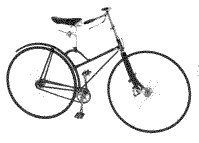
Diamond Frame Bicycle: Image courtesy of the "Pedaling History Bicycle Museum", 2006.
For a more comfortable ride, the pneumatic tire was added to the diamond frame bicycle in the 1890s. This new bike had two air-filled tires of equal size. In 1898, bicycle brakes were developed. The 1890s was the heyday of the bicycle, at which time everybody was taking to the streets in the city and the country. Women dressed more sensibly for riding and gained some independence with their new mobility.
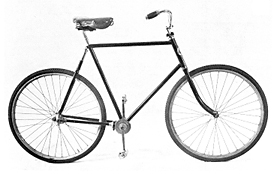
Diamond Frame Bicycle with Pneumatic Tire: Image courtesy of the "Pedaling History Bicycle Museum", 2006.
Although sales plummeted during the early years of the 20th century, the bicycle made a comeback after WWI with the children's bicycle. These diamond frame bikes featured characteristics of the automobile and the motorcycle. The bicycle continued to evolve, becoming heavier and more ostentatious as the years roll into the 1950s. By the 1960s, bicycles became leaner and simpler.
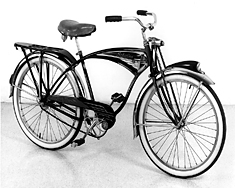
Children's Bicycle: Image courtesy of the "Pedaling History Bicycle Museum", 2006.


