Electric Bulb or Neon
Streets were aglow with electric lights in the late 19th century, but electricity did not appear in storefront advertising until the 1920s. Electric signs quickly began outnumbering the traditional signs of the commercial district.
Early electric signs used incandescent bulbs, which outlined either the shape of the sign or the letters on the sign. This method made use of the types of signs popular at that time, namely the vertically projecting signs and rooftop signs.
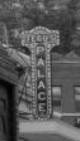
Electric Bulb Sign: Image courtesy of the University of Vermont Landscape Change Program and the Vermont Historical Society
In the 1930s, neon signs appeared with frequency, especially on new storefronts. Neon largely replaced the incandescent bulbs and is still a popular form of advertising today. After Prohibition ended, in the 1930s, taverns owners made extensive use of electric signs, advertising beers with neon signs, clocks, and light fixtures. Coca-Cola introduced their "Drink Coca-Cola" signs in the 1930s, which became the most popular name brand advertisement. Although the neon glow is not visible in historic black and white photos, the tubing can be identified, as seen on the sign in the image below.
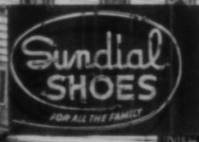
Neon Sign: Image courtesy of the University of Vermont Landscape Change Program and the Vermont State Archives
Although introduced in the 1920s, translucent back-lit signs gained increasing popularity after WWII. As well, metal signs with porcelain-enamel sheeting were floodlit at night. This was one of the most popular forms of electric advertising around the mid-20th century. Note the lamps extending over the signs in the image below.
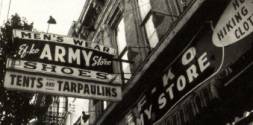
Floodlit Sign: Image courtesy of John A. Jakle, Signs in American's Auto Age: Signatures of Landscape and Place, 2004


