Rooftop
During the 1910s and 1920s, advertising became increasingly focused on automobile traffic. Whereas the pedestrian had a small field of vision close to the street level, the automobile driver, speeding down the center of the street, could view larger signs at greater heights. The traditional storefront sign was too small to be seen from the passing automobile. Rooftop signs gained popularity during this time.
Often scaffolding was mounted on the rooftop, upon which the sign was mounted. These rooftop signs were more popular in larger cities, as they competed with the growing height of surrounding buildings. The example below, however, is from Burlington.
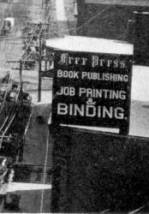
Rooftop Sign on Scaffolding: Image courtesy of the University of Vermont Landscape Change Program and the Fletcher Free Library
Many rooftop signs simply consist of a rectangular name sign mounted just above the front edge of the roofline, as seen in the image below.
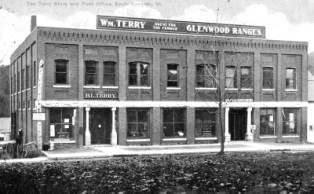
Rectangular Rooftop Sign: Image courtesy of the University of Vermont Landscape Change Program and the University of Vermont Special Collections
On many corner businesses, rooftop signs were placed on the cornice of the buildings, extending above the roofline. Often these signs were likenesses of the product or serviced provided by the business, as seen on the pharmacy below.
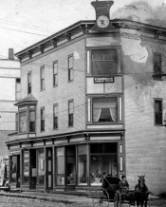
Rooftop Pharmacy Sign: Image courtesy of the University of Vermont Landscape Change Program and Highland Lodge


