Vertically Projecting
During the 1910s and 1920s, advertising became increasingly focused on automobile traffic. Whereas the pedestrian had a small field of vision close to the street level, the automobile driver, speeding down the center of the street, could view larger signs at greater heights. The traditional storefront sign was too small to be seen from the passing automobile. Vertically projecting signs were quite popular at this time. They more easily caught the attention of approaching automobiles, as they faced sideways. Signs that were flat on the building, like fascia and belt signs, could only be seen upon passing directly by. As the years progressed and advertising competition increased, vertical signs grew taller and taller, often projecting above the roofline.

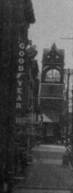
Vertical Signs: Image courtesy of the University of Vermont Landscape Change Program and the Vermont State Archives. Image courtesy of the University of Vermont Landscape Change Program and the Bristol Historical Society
Vertical signs were often electrified, consisting of incandescent bulbs or neon tubing. Electric signs grew in popularity after WWI, using mainly incandescent bulbs, seen below. Neon signs appeared in the 1930s.

Electrified Vertical Sign: Image courtesy of the University of Vermont Landscape Change Program and the Vermont Historical Society


