Rural
Rural Free Delivery Service began in 1896. At that time, farmers placed any type of can or box out on the road to collect their mail. Standards for rural mailboxes were issued in 1903. Boxes needed to be placed "buggy high" and within easy reach of the letter carriers, had to be constructed of galvanized sheet metal, had to open from the side or top, and had to be equipped with an adjustable signal. However, the tunnel shaped mailbox that is so familiar today was not designed until 1915. This style has remained the standard, with large boxes being issued in 1929 to hold parcels as well as letters.
The boxes in the image below are a sampling of the type of rural mailbox that was permissible between the years of 1903, when standards were issued, and 1915, when the tunnel shaped box was required.
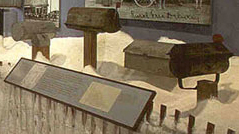
Assorted Rural Mailboxes: Image courtesy of the Smithsonian National Postal Museum online exhibit
The box in the image below is an example of the tunnel shaped rural mailbox issued in 1915. The box has changed little since its introduction nearly a century ago.
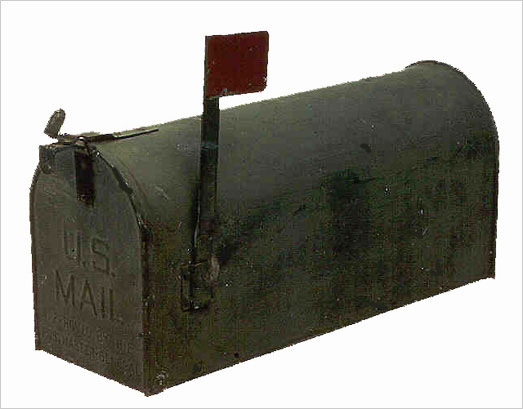
Tunnel Shaped Rural Mailbox: Image courtesy of the Smithsonian National Postal Museum online exhibit


