Queen Anne
The most exuberant of the Victorian era styles, the Queen Anne was popular during the 1880s and 1890s in Vermont. The rambling houses typically boasted wrapping porches with decorative turned (sculpted on a lathe) porch posts, prominent towers, detailed woodwork (also called stickwork), patterned shingles, bay and stained glass windows, and an irregular, asymmetrical form. However, many low-style vernacular houses were constructed during this time, which usually feature only one or two simplified Queen Anne details. These low-style houses are also commonly called Folk Victorians.
The following details are common to the Queen Anne style. High-style examples will feature most of these details, while low-style examples will feature only one or two.
Irregular, Asymmetrical Form
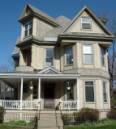
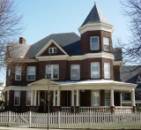
Images courtesy of Elizabeth André
Tower
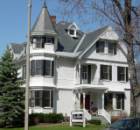

Images courtesy of Elizabeth André
Bay Window, Often Multiple Stories Tall
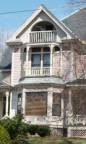
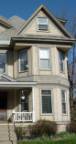
Images courtesy of Elizabeth André
Wrapping Porch with Turned Posts and Spindlework
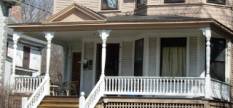
Image courtesy of Elizabeth André
Stickwork
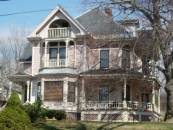
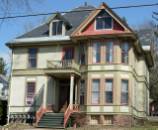
Images courtesy of Elizabeth André
Patterned Shingles; Usually Fish-Scale Shingles
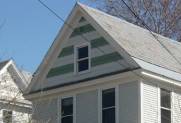
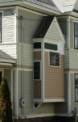
Images courtesy of Elizabeth André
Picture Windows with Stained Glass Transom
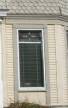
Images courtesy of Elizabeth André
Transitional Details
During the late 1890s, Colonial Revival details began to appear in Queen Anne style structures. These RtransitionalS houses were more restrained, usually had pedimented (triangular) gable-front roofs, featured Colonial Revival porches (supported by plain round columns), lacked the stickwork and other exuberant details of the Queen Anne style, and occasionally had small modillions (tooth shaped brackets) beneath the eaves. Many of the transitional houses lacked towers. When towers did appear, they were more restrained P shorter and pulled into the massing of the building. The following images illustrate this Queen Anne to Colonial Revival transitional style.
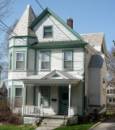
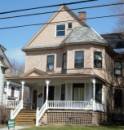
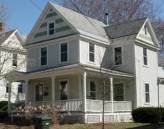
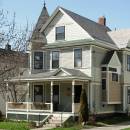
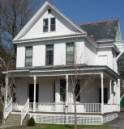
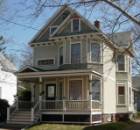
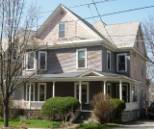
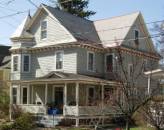
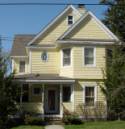
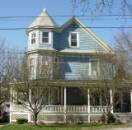
Images courtesy of Elizabeth André


