Automobile and Carriage Tracks
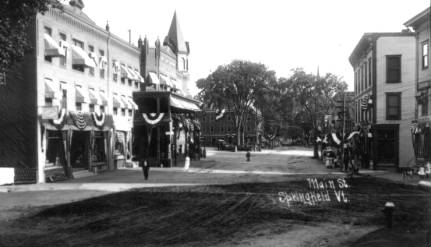
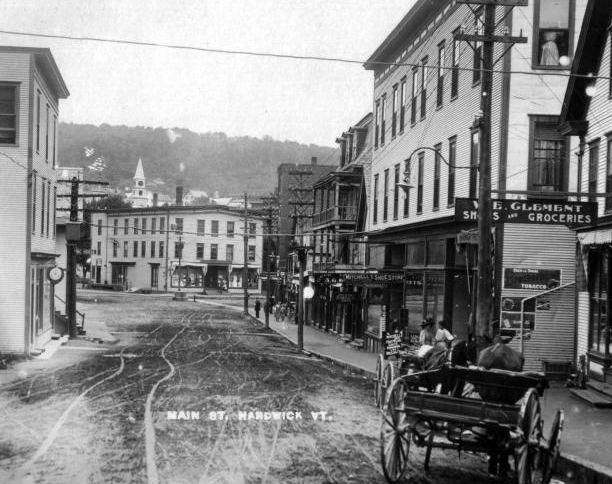
When vehicles are not present in an image, it may be possible to look at the type of tracks along dirt roads to narrow the time period of the image.
Carriage wheels were generally wooden and very slender. If the road is filled only with slender tracks, it is likely of the pre-automobile era, as seen in the image below. Additionally, notice how erratic and curving many of the lines are, due to the slow, rough movements of the carriages and the lack of any rules of the road.
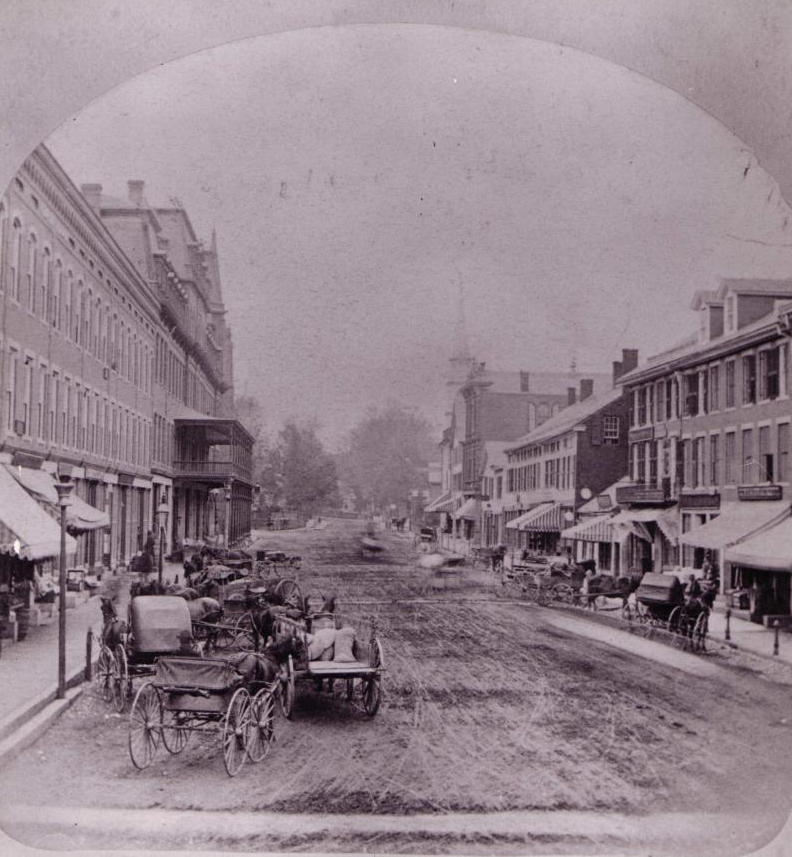
Carriage Tracks: Image courtesy of the University of Vermont Landscape Change Program.
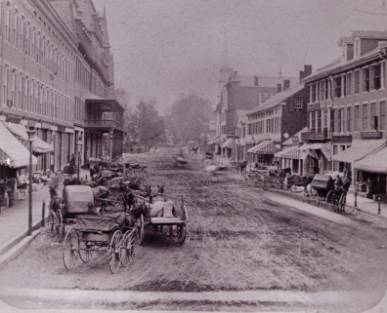
Carriage Tracks: Image courtesy of the University of Vermont Landscape Change Program and the Vermont Historical Society.
Early automobile tires were much narrower than the tires we use today. In the early 1900s and 1910s, tires were wider than carriage and bicycle wheels but still fairly thin. During this time period, automobiles and horse-drawn carriages shared the roads. It is common to find roads that reveal a large number of carriage wheel tracks along with one or two early tire tracks. Notice the wider set of tracks on the left side of the image below. It is also apparent that the vehicle making the tracks was much heavier than a carriage, as the dirt looks considerably packed down.
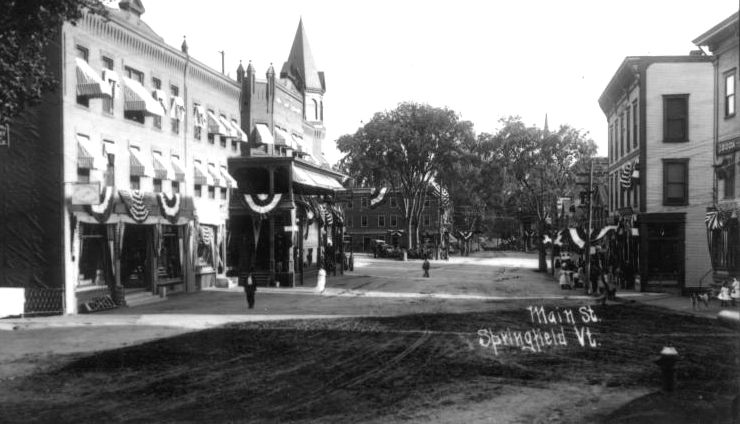
Carriage and Automobile Tracks: Image courtesy of the University of Vermont Landscape Change Program and Highland Lodge.
During the 1920s, many roads were being paved, but a lot of dirt roads still existed. At this time, horse-drawn carriages were virtually non-existent, and many people had automobiles. Most early 1920s vehicles still had narrow tires, as seen below. Not until the late 1920s, around 1927, did tires widen to a size comparable to today"s tires. If the tire tracks on the road are wide, the image likely dates from the late 1920s or later. When both wide and narrow tire tracks are seen side by side, the image likely dates from the late 1920s. If the image has only narrow tracks, it is likely the late 1910s to mid-1920s.