Urban and Village
During the 19th century, most roads were still unpaved. In urban areas and villages, streets in the central business districts were paved with brick or cobblestone and many were being macadamized (an early form of paving), but most side streets were still unpaved and virtually all rural roads were unpaved. The Good Roads movement formed in 1894 in an effort to improve the muddy, unstable condition of roads. This movement was urged in part by the bicycle enthusiasts of the 1890s who found getting around quite difficult and dangerous. This effort, though, was slow going, as few roads were paved yet in the early 20th century.
Although many cities and towns had sidewalks, primarily wood or macadam and occasionally slate in wealthier areas, during the 19th century, the bulk of sidewalk and curb construction came about in the early 20th century. New technology made it possible to construct the concrete sidewalks and curbs that line our streets today. Many side roads in residential neighborhoods first received sidewalks during this time. The image below illustrates a 19th century wood plank sidewalk.
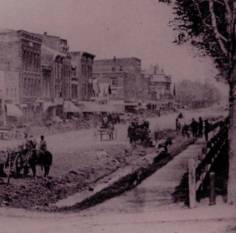
Wood Plank Sidewalk: Image courtesy of the University of Vermont Landscape Change Program and the St. Albans Historical Society.
The 1920s were the Golden Age of road building. During this time many roads were flattened, straightened, and paved with concrete, macadam, or asphalt. Downtown commercial districts received a makeover during the 1920s. Roads were widened to accommodate the automobile and the curbside parking that it required. The image on the left illustrates a concrete road, characterized by the straight cracks between sections of concrete. The image on the right illustrates new curbside parking in a 1920s commercial streetscape.
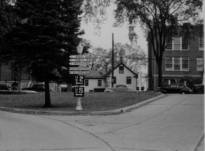
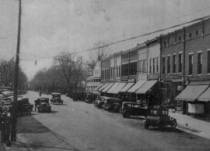
Concrete Road (left) and Curbside Parking on Main Street (right): Image on the left courtesy of the University of Vermont Landscape Change Program and the Vermont State Archives. Image on the right courtesy of the UVM Landscape Change Program and the Bristol Historical Society.
Although a significant amount of road improvement took place in the 1920s, there was still much to be done. As part of Roosevelt's New Deal, between 1933 and 1938, WPA workers paved old roads and constructed new ones. A significant amount of roadwork was done in Vermont during this time, much of which was documented photographically. After WWII, asphalt was the primary paving material, as it was cheaper than concrete.


