Supermarkets
During the late 19th and early 20th centuries, grocery stores were very utilitarian, featuring unfinished wood floors, bare light bulbs, and pressed tin ceilings, and located in the commercial blocks of downtown business districts. Meat, fish, and produce were typically sold separately in different shops. Shoppers entered a market and read their list to the store clerk, who then picked the items from a shelf, barrel, or refrigerated case, rang up the order, and wrapped the goods for the customer.
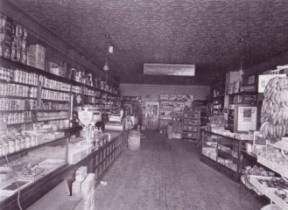
19th Century Grocery Store Interior: Image courtesy of Chester H. Liebs, Main Street to Miracle Mile, 1995
After WWI, chain stores began to compete with the small, privately owned grocery stores. Initially, the chain stores only carried canned or packaged foods, but they eventually decided to expand their businesses. The specialized markets that predominated in the 19th century began to merge under one roof. Groceries, meat, fish, and produce were all sold in large "combination stores." Most of these business also implemented self-service shopping, which allowed customers to grab a basket and pick their own goods off the shelves. These new combination stores required companies to rent two or three adjacent shops in a commercial block to expand their floor space.
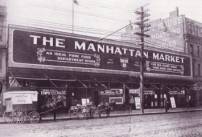
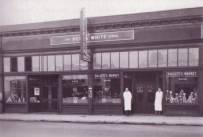
Combination Stores: Image courtesy of Chester H. Liebs
During the Great Depression of the 1930s, the large-scale, free-standing supermarket was borne. Companies began constructing 4,000 to 6,000 square foot combination stores that could sell large quantities of goods at low prices. These new stores were dubbed "supermarkets."
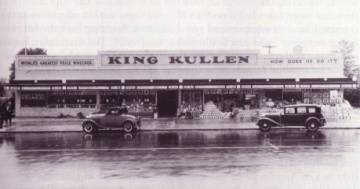
1930s Supermarket: Image courtesy of Chester H. Liebs
Like many other businesses of the 1930s, the supermarket received a Streamline Moderne facelift. Glass, stainless steel, porcelain enamel tile, sharp lines and smooth, rounded corners, Art Deco zigzags, and neon signs all characterized this new, up-to-date supermarket storefront.
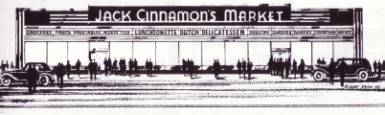
Streamline Moderne Supermarket: Image courtesy of Chester H. Liebs
During the 1940s and 1950s, buildings became more utilitarian. Brick or concrete block walls, large windows extending across the front, and flat roofs all characterized this functional supermarket design.
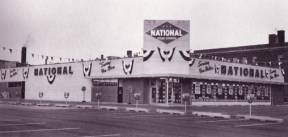
Functional Supermarket Design: Image courtesy of Chester H. Liebs
The uniformity of the 1940s and 1950s utilitarian supermarket prompted many companies adopt the Exaggerated Moderne style. Large, geometric shapes dominated this new building style.
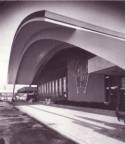
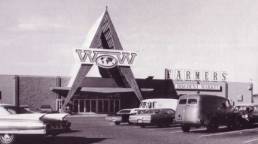
Exaggerated Modern Supermarkets: Image courtesy of Chester H. Liebs


