Environmental
The 1960s mark a rebellion against roadside architecture and the disregard of the automobile for the natural environment. The "futuristic" glass and steel boxes, encased in a glossy porcelain skin, glowing along the nighttime highway became gaudy reminders of the excesses of the previous decades. Gas companies revisited historical styles and the use of natural materials for their new gas stations. Wood, brick, and stone veneers replaced the glass, steel, and porcelain of the Modern era. Colonial Revival details, Mansard roofs, and Ranch house designs all helped the gas station assimilate with the surrounding landscape.
The image below depicts the Colonial Revival gas station design of the 1960s. This Sunoco prototype features a brick veneer, cupola, and gable roof, all suggesting historical New England architecture.
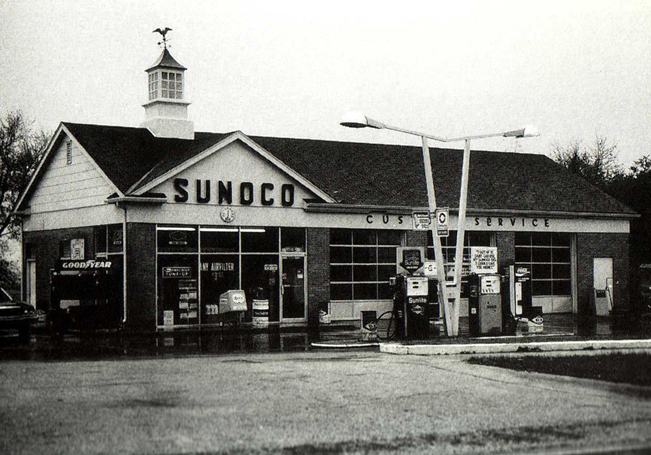
Colonial Revival: Image courtesy of John Jakle, Gas Station in America, 1994.
The image below depicts the Ranch style gas station design of the 1960s. This Shell prototype employs the low, gable roofline and narrow porch characteristic of the popular 1950s and 1960s Ranch house.
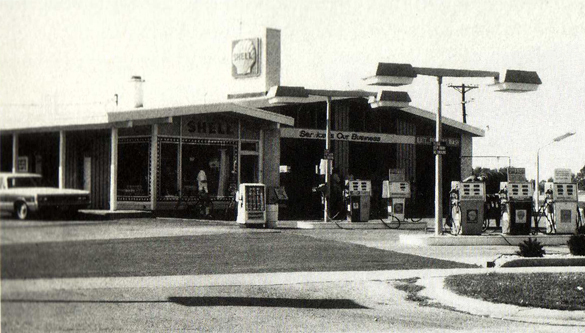
Ranch Style: Image courtesy of John Jakle.


