Post-War Modern
Initially designs changed little from simple box stations of the pre-war years. The late 1940s and 1950s saw a continued use of the box style, with an increasing interest in glass and steel and geometric forms. As the 1950s progressed, more exaggerated forms of Modernism were employed, breaking out of the typical rectangular box into unique geometric designs. In the 1950s, the canopy reappeared on the gas station, often used as an advertising gimmick with the names of the oil companies in displayed in large letters. These canopies often took on distinct geometric forms. The images below are only a small sample of the types of gas stations and canopies constructed during these post-war years.
The image below depicts a simple, modern canopy. Note the large Texaco logo standing atop the canopy and the simple, unadorned design.
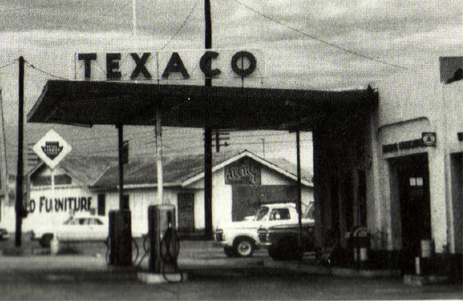
Modern Style Station: Image courtesy of John Jakle, Gas Station in America, 1994.
The image below depicts the unique forms incorporated into the post-war gas station designs. Note the unadorned rounded canopy supported by a simple post and the large lettering of the company name displayed along the side.
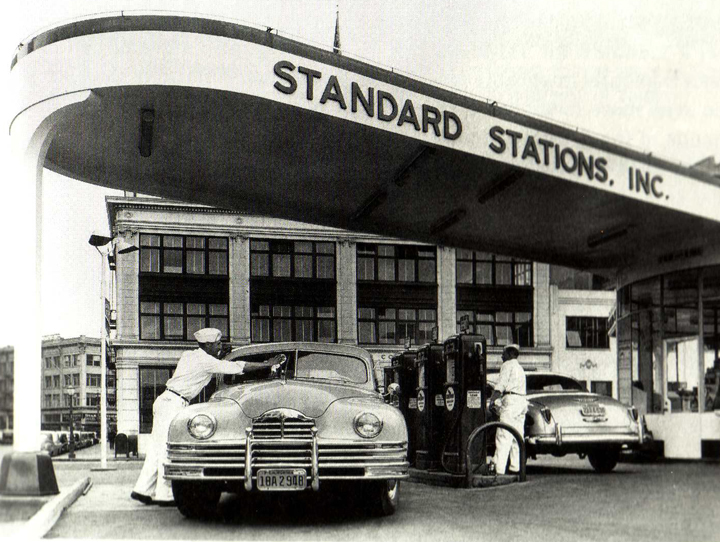
Modern Style Station: Image courtesy of John Jakle.
The image below depicts another unique canopy design. Note the triangular, canted canopy, which dominates the design of the filling station. Although the name is not displayed upon the canopy itself, a late sign extends upward through the tip of the canopy.
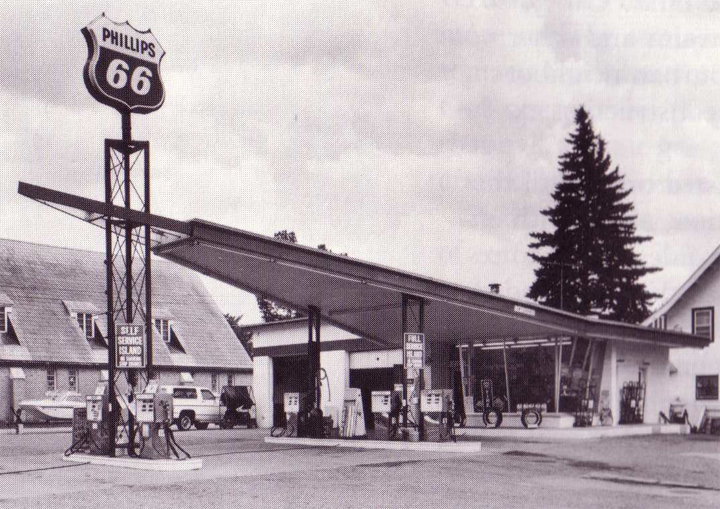
Exaggerated Modern: Image courtesy of Chester Liebs, Main Street to Miracle Mile: American Roadside Architecture, 1985.


