Dutch Revival
The Dutch Colonial Revival style gained popularity in the 1920s and 1930s and is characterized by the Dutch gambrel roof. The roof is the unifying feature among houses of this style, although other characteristics are common to the Dutch Colonial Revival. These structures are generally modest in massing and detail and were built in large numbers in new 1920s developments.
The most common Dutch Colonial Revival features an eaves-front gambrel roof that encompasses the second story of the structure. A long, shed roof dormer usually spans the front façade. These structures often feature other Colonial Revival details, including Colonial Revival porches, multi-pane windows, and Classical door surrounds. The images below illustrate typical eaves-front gambrel roof structures.
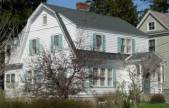
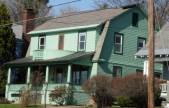
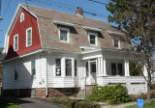
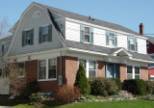
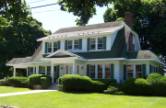
Eaves-Front Dutch Colonial Revival: Images courtesy of Elizabeth André
The less common Dutch Colonial Revival style structures have gable-front gambrel roofs. The façades are asymmetrical and also feature Colonial Revival details. Some high-style examples of the gable-front design can be found, as seen on the left, usually dating from the early 1900s or 1910s.
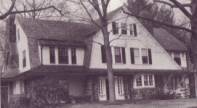
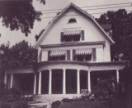
Gable-Front Dutch Colonial Revival: Images courtesy of Virginia and Lee McAlester, A Field Guide to American Houses, 2004


