Tudor Revival
The Tudor Revival style, based on early English building traditions, became appeared in the early 1900s and remained popular into the 1940s. Tudor Revival structures range from the rambling high-style houses with elaborate façades to the modest, unadorned houses available in mail order catalogs of the 1920s. Although Tudor Revival structures can greatly differ, there are a number of features that are common to the style and allow an easy identification.
The image on the left exemplifies the type of modest Tudor Revival constructed from the 1920s to the 1940s. These homes were often mass produced for use in new automobile suburbs. The image on the right exemplifies a high-style Tudor Revival, which displays many of the intricate details popular to the style.

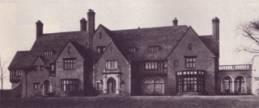
Image courtesy of Elizabeth André. Image on the right courtesy of Virginia and Lee McAlester, A Field Guide to American Houses, 2004
At least one of the following features can be found on every Tudor Revival.
Steeply Pitched Gables
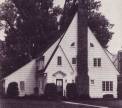
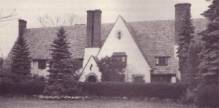
Images courtesy of Virginia and Lee McAlester
Prominent Front-Facing Gables
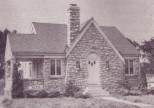
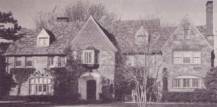
Images courtesy of Virginia and Lee McAlester
False Half-Timbering
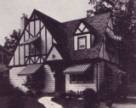
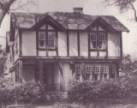
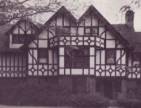
Images courtesy of Virginia and Lee McAlester
Mix of Masonry, Stucco, and Clapboards with Rusticated Stone Details
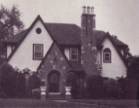
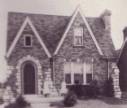
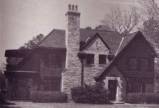
Images courtesy of Virginia and Lee McAlester
Window Quarrels (Diamond Pattern)
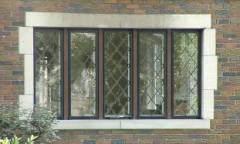
Image courtesy of "Buffalo as an Architectural Museum."
Prominent Chimneys
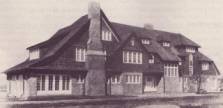
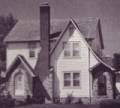
Images courtesy of Virginia and Lee McAlester
Round-Arch or Flat Pointed-Arch Doorways and/or Vertical Plank Doors
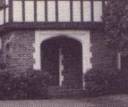
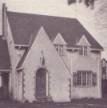

Images center courtesy of Virginia and Lee McAlester. Image on the right courtesy of "Buffalo as an Architectural Museum"


