Traffic Signals
At the turn of the century, city streets were gridlocked with an untamed mass of streetcars, carriages, automobiles, and bicycles. Even country roads were becoming heavily trafficked with weekend travelers. The traffic lights that we take for granted today were not present at busy intersections. Slowly, through the 1910s and the 1920s, traffic controllers introduced the stop, slow, and go signals into urban and rural intersections, and these new devices evolved into the red, yellow, and green signals still used today.
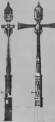
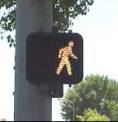
Click on the thumbnail below that closely resembles the type of signal in your historic image.
| Early Traffic Signals (Traffic Towers, Two-Light Signals, and "Slow, Keep Right" Signals) | ||
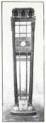
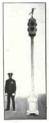
 |
||
| Four-Way Signals | Semaphore Signals | Pedestrian Signals |
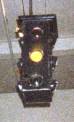 |
 |
 |


