Diners
Although typically association with the Streamline Moderne era of the 1930s and 1940s, the diner originated in 1872 when a Providence, Rhode Island, entrepreneur opened a beanery on wheels. The idea of the urban chuck-wagon quickly caught on, and these little food stands on wheels were quite familiar in the Northeast by 1900. Proprietors continued to pull their wagons up and down the streets, but many also bought small plots of land and set up their wagons permanently.
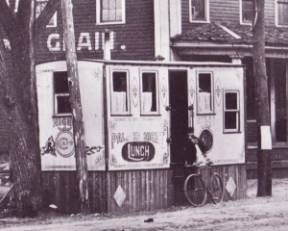
Lunch Cart: Image courtesy of Chester H. Liebs, Main Street to Miracle Mile, 1995
By 1920s, the dining-car industry boomed. The diners no longer roamed the street but had become fixed establishments on city lots, allowing larger, more varied design possibilities. Early prefabricated designs still closely resembled their lunch-cart predecessors with ribbons of tiny windows and monitor or barrel roofs.
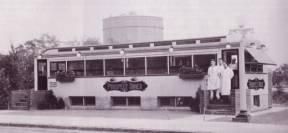
1920s Prefab Dining Car: Image courtesy of Chester H. Liebs
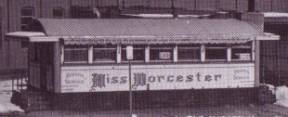
1920s Prefab Dining Car: Image courtesy of Chester H. Liebs
Diner business increased significantly during Prohibition, and the restaurants began offering expanded menus, longer hours, and catering to a larger clientele. The cheap food offered in the dinning-cars remained quite popular during eh economic hardships of the Great Depression.
The diner continued to prosper in the post-WWII years, even when a number of other 19th century institutions were on the decline. the small units could early be plunked on small lots along Main Street or set up along highways outside of town. At this time, the diner began to take on the aesthetics of a railroad car, having a flat roof, streamlined, stainless steel surfaces, and large exterior windows.
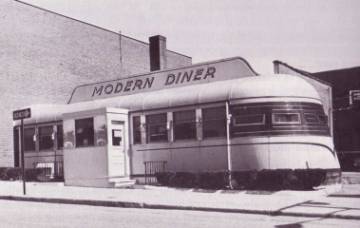
Railroad Car Diner: Image courtesy of Chester H. Liebs
As the 1950s drew to a close, the diner began losing business to the fast food chains. As a result, the railroad motif was abandoned in favor of a more family-oriented atmosphere and traditional look. The new diners featured columns, mansard roofs, trellises, and stone cladding.


