Restaurants
Prior to 1920, few roadside eateries existed for motorists. In solution to this problem, tearooms began to open up along roadsides. The name "tearoom" suggested a safe, quiet place, especially to women, and they were typically located in quaint, historic buildings. After the 1920s, the tearoom began to disappear from the roadside.
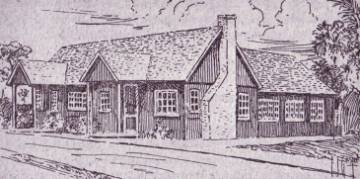
Tearoom: Image courtesy of Chester H. Liebs, Main Street to Miracle Mile, 1995
By 1930, the first family restaurants made their way to the roadside. The first Howard Johnson's restaurant opened in Quincy, Massachusetts, in 1929, and the company continued to expand into a roadside empire. Although Howard Johnson's restaurants had a number of unifying characteristics, such as an orange roof, no two were alike, and the styles of the Howard Johnson's restaurants reflect the changing architectural trends of the era.
Many early restaurant chains from the 1930s used architectural gimmicks, like the windmills below, to lure motorists.
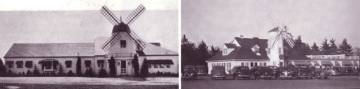
Dutch Themed Family Restaurants: Image courtesy of Chester H. Liebs
Colonial Revival architecture was also used quite heavily for roadside restaurants during the 1930s - the cupola being the most character-defining feature.
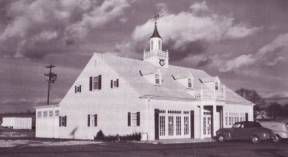
Colonial Revival Style Family Restaurant: Image courtesy of Chester H. Liebs
By the 1950s, restaurants were abandoning traditional designs and embracing modernization. The Howard Johnson's restaurant seen below features a low, overhanging hipped roof, large windows, and a stylized, modern cupola.
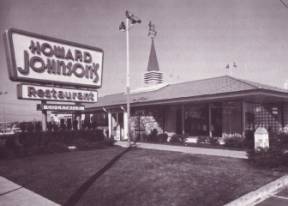
Modern Family Restaurant: Image courtesy of Chester H. Liebs


